If the dreamer in you it would have been God, what would you dream?
Sibiu, El gran teatro del mundo, and the Baroque Idea of the Human Being as Actor before God
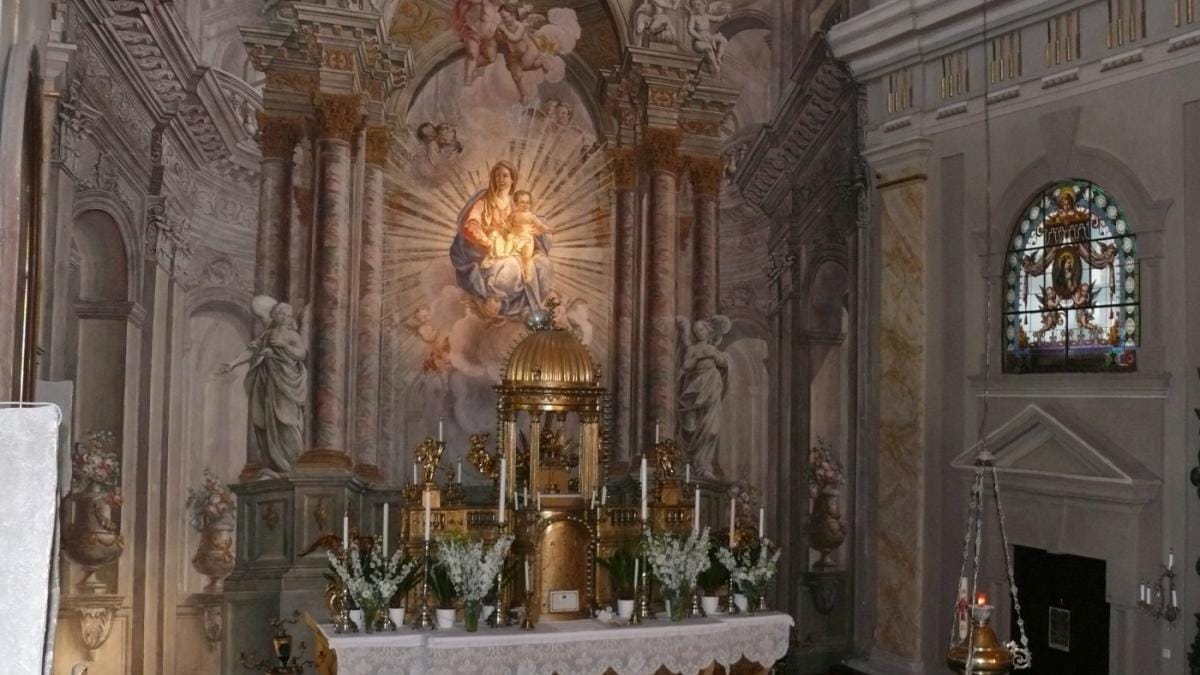
The Baroque world understood something with exceptional intensity: human life unfolds not only in history, but in appearance. It is lived before witnesses, within structures of visibility, under the pressure of symbolic form. The idea that the world is a stage and human beings are actors is older than the seventeenth century, yet in the Baroque period this motif acquired a distinctly theological and dramatic force. In Pedro Calderón de la Barca’s El gran teatro del mundo, God appears as author, distributor of roles, and final judge, while each human person occupies a part that must be performed within the temporal order of the world.[1] The central issue is not social status but moral enactment: not who one is in worldly hierarchy, but how one has played one’s role.
This same logic can be extended beyond theatre and read within architecture, painting, ritual, and urban sacred space. In this sense, the Baroque church interior is not only decorative, nor merely illustrative. It is a mode of formation. It constructs a field in which the believer becomes conscious of being seen, measured, and summoned into a heightened form of self-presentation before the divine. Such a framework offers a productive lens for approaching Sibiu, a city more often interpreted through the categories of Gothic inheritance, Lutheran sobriety, civic order, and confessional plurality. Yet Sibiu also belongs to a Baroque geography of visual persuasion and sacred staging.[2]
This essay argues that the Baroque presence in Sibiu, particularly in relation to the Roman Catholic sacred interior, can be interpreted through the conceptual framework of El gran teatro del mundo. The point is not to claim direct textual influence in a narrow sense, but to identify a shared Baroque anthropology: one in which human beings are visible agents placed within a divinely charged world of roles, forms, and judgments. The church becomes a stage of spiritual seriousness, and the city itself may be read as a layered theatre of confession, ritual, and self-display. The question posed in the title—If the dreamer in you were God, what would you dream?—extends this inquiry into the realm of theological imagination. It asks whether the human impulse toward form, beauty, and meaning may itself bear the trace of a divine dramaturgy.
