How Baroque Music Speaks a Forgotten Language
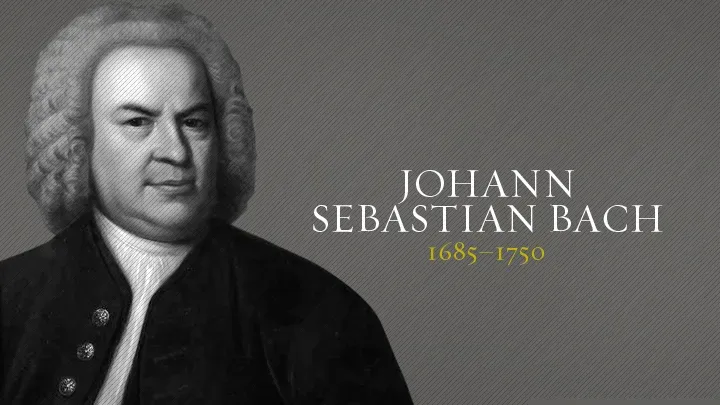
In Which Bach Becomes Our Interpreter Between Heaven and Earth
To the modern ear, Johann Sebastian Bach is a kind of sacred whisper from the past — beautiful, profound, perhaps mysterious. But in his own time, he was neither a god nor a relic: he was a working musician, a craftsman of astonishing industriousness, and a composer who laboured with relentless intensity in a world that did not always recognise genius. As one radio article notes, Bach himself said simply, “I worked enormous amounts. But anyone who works can realize their wishes.” — a remark that underlines not only his tireless ethic, but the strenuous conditions under which he created music that we now revere as divine.
Baroque Music: A Rhetoric of Feeling and Meaning
Baroque music, especially in its German incarnation, is not a kind of ornamented background. It is argument, rhetoric, conviction set to sound. If Renaissance music aimed at balance and purity, Baroque music sought movement, contrast, and affect — an emotional architecture shaped like a persuasively reasoned sermon. In the Baroque era, music was rhetoric sung, intended to move the affections as much as the mind: to make you feel repentance, joy, awe or consolation as though you were part of a living conversation, not a passive listener. Bach’s cantatas and oratorios were composed exactly in this spirit: they are not entertainment, but theological debate rendered in sound.
To understand this forgotten musical language, we must first dispense with modern assumptions that music’s role is primarily aesthetic. For Bach and his contemporaries, beauty was not an end in itself, but a vehicle for truth — a belief shaped by the theological urgency of Lutheran Germany. Baroque composers inherited vocabularies of affect (Affektenlehre), where specific melodic gestures and harmonic progressions corresponded to distinct emotional and spiritual states. Music, in this world, did something to the listener’s soul.
Thus, when Bach writes a chorale or a fugue, he is not decorating scripture; he is commenting on it, translating the Gospel into an emotional and intellectual experience. The Christmas Oratorio exemplifies this: its celebratory fanfares declare what has happened, but its more intimate movements show what it means to the believing heart.
Bach: The Hardships Behind the Genius
Bach’s own life mirrors the inner logic of his music. Born into a prolific family of musicians in 1685, he was orphaned young and educated by an older brother who had studied with Pachelbel. He spent much of his early career moving between positions — from organist posts to court musician to, finally, the demanding role of Thomaskantor in Leipzig, where he had to compose new music almost every week for church services.
Crucially, Bach’s career was not one of unbroken triumph. He struggled for recognition, misunderstood by some contemporaries as a stubborn traditionalist in a time of changing tastes, and he often clashed with employers over matters of style and remuneration. The Lutheran churches of Leipzig expected not only artistic excellence but doctrinal clarity from their music — and Bach delivered both amid personal and professional strain. Many of his Leipzig cantatas survive only because he wrote them under weekly deadline, in a relentless cycle of creation that would exhaust the most ardent craftsperson.
Yet out of this enormous labour arose music of astonishing structural coherence and emotional depth. By blending the contrapuntal mastery he inherited and perfected — intricate fugues, lines weaving and responding like dialectical discourse — with liturgical purpose, Bach transformed Baroque rhetoric into something timeless.
Why Baroque Music Is a Forgotten Language
When we call Baroque music a forgotten language, we don’t mean that it is unintelligible. Rather, its expressive norms are alien to our modern aesthetic assumptions: we no longer think of music as theology in motion, nor as a mode of rational persuasion. Today, we often listen for ambiance or emotion detached from argument. In Bach’s time, listeners were trained to hear meaning in every melodic turn, emotion as inference, and harmonies as structured thought.
This is why Bach can sound like a mirror to the soul. His music does not merely evoke feelings — it articulates them. The counterpoint in a fugue, for example, is not complexity for its own sake; it is an enactment of participation in spiritual order — multiple voices, independent yet harmonically interdependent, rising toward a unified truth. Such writing reflects the Baroque conviction that complexity, when ordered with discipline, yields clarity — a principle that guided Bach’s entire oeuvre.
Bach’s Legacy: A Language Rediscovered
The fact that Bach’s music was largely rediscovered generations after his death — propelled by Mendelssohn’s 1829 revival of the St Matthew Passion — shows how easily his language could slip into obscurity once the immediate context of Lutheran musical rhetoric had faded. Yet when we learn to listen as Bach intended — not as background sound, but as argument and devotion — something remarkable happens: music ceases to be merely heard and becomes understood.
Thus Baroque music speaks to us not merely because of its beauty, but because it was designed to engage our entire being: intellect and emotion, devotion and reason. Bach did not write notes; he wrote answers — to questions of faith, order, and the human capacity for transcendence. To hear him rightly is to learn, with the orchestras and choirs of Leipzig or of Sibiu, to read music as if it were text, and to feel text as though it was life itself.
